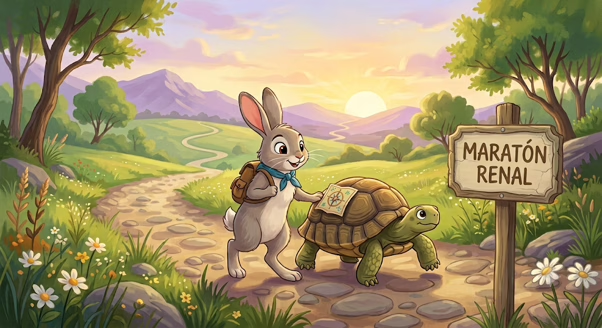
The hare from the classic fable has always gotten a bad rap. We remember it as scatterbrained, arrogant, and losing a race purely through a lack of foresight against a diligent, steady tortoise. However, if we look more closely, the hare is not the enemy; it is simply an animal designed to react instantly to the slightest rustle in the undergrowth. Its speed and its tendency to startle are not flaws: they are its survival mechanism.
Something very similar happens in our minds when we face life's unexpected twists. We all harbor an "emotional hare" and a "sentimental tortoise." The hare represents our most immediate and visceral emotions: fear, surprise, anger, or despair. It appears quickly, without thinking, consumes enormous amounts of energy, and shakes us to our core. The tortoise, by contrast, represents feelings filtered through reflection and time: it takes longer to take shape, but it provides stability, perspective, and long-term consistency.
When confronted with a chronic illness such as kidney disease, life's horizon ceases to be a sprint with a clear, attainable finish line and instead becomes a true marathon with no end. It is a journey riddled with medical appointments, monthly blood tests, and waiting rooms, where every visit can bring bad news, drastic medication changes, or the arrival of treatments that hijack your time and energy.
In that scenario, it is completely natural—and biologically necessary—for your inner hare to leap up and start running wildly. The fear you feel when entering the doctor's office, the anger over a poor creatinine result, or anticipatory anxiety are not signs of weakness or of "thinking negatively." They are your alarm system warning you that there is a real threat to your stability. Your hare is the lookout on the ship: its job is to shout loudly because it sees the reef. The danger is not the lookout's cry; the real danger arises when we allow the panicked lookout to take the helm of the ship.
Living exclusively from the hare's present-focused perspective can push us toward paralysis, denial of reality, or reckless attempts to escape that put our health at risk. That is why the challenge is not to silence the hare or judge yourself for feeling fear or sadness. The secret is to listen carefully to its warnings, validate its protective role, and then awaken the tortoise so it can assess the entire map. Climbing onto the tortoise's back means giving ourselves time to breathe before making hasty decisions, sharing the diagnosis with those around us, and remembering that we are whole people, with strengths that go far beyond a medical label.
To begin coordinating your hare and your tortoise starting tomorrow, I suggest a practical exercise: at your next medical appointment or the next setback you face, put this rule of thumb to the test: separate what must be accepted from what can be adapted.
There are aspects of the illness that your tortoise will have to accept as non-negotiable facts (a strict medical regimen, a dietary restriction, or attending treatment). However, there is a wide space where it can negotiate adaptation: the time you choose to take your medication so it does not disrupt your rest, creative ways of cooking within your limitations, or whom you choose to share your thoughts with after the appointment.
Allow the hare to show you where the danger lies with its immediate energy, but trust the tortoise's calm and steady pace to design how you are going to travel the road ahead. Listen to the lookout, but keep your hands on the helm.
When the hare and the tortoise join forces, the race does not become any shorter, but it does become more manageable.
Manuel Martínez
Psychologist